|
PHILHARMONICA. International Music Journal
Reference:
Pavlova-Borisova, T.V. (2025). On the musical-journalistic heritage of F.A. Baisheva: towards the 100th anniversary of the first Yakut professional choirmaster. PHILHARMONICA. International Music Journal, 4, 14–27. https://doi.org/10.7256/2453-613X.2025.4.77552
On the musical-journalistic heritage of F.A. Baisheva: towards the 100th anniversary of the first Yakut professional choirmaster
Pavlova-Borisova Tat'yana Vladimirovna
PhD in Art History
Associate Professor, Department of Culturology, Ammosov North-Eastern Federal University
677000, Russia, Republic of Sakha (Yakutia), Yakutsk, Kulakovsky str., 42

|
pavlovaborisova@mail.ru
|
|
 |
Other publications by this author
|
|
|
DOI: 10.7256/2453-613X.2025.4.77552
EDN:
RSZXAW
Received:
12/30/2025
Published:
01/20/2026
Abstract: The object of the study is musical journalism in Yakutia in the second half of the 20th century. The subject of the research is the musical and journalistic legacy of the first professional choir conductor from Yakutia, People's Artist of the RS (Ya), Honored Artist of the RSFSR Fevroniya Alekseevna Baisheva (1925–2017). The author examines aspects such as the classification of F.A. Baisheva's musical and journalistic legacy, the main themes, issues in her analytical articles, reviews, notes, critiques, and creative portraits. Special attention is given to specific problems in the development of musical art in Yakutia that she raised. Her role in the development of musical journalism in Yakutia is highlighted as one of the representatives of the first generations of musicians in the academic direction of the national republics of the RSFSR, who took on the mission of being guides to the world of musical art for broad segments of the population in their regions. Being bilingual, they established the foundations of musical journalism in the subjects of Russia in both Russian and their native languages; its main tasks, in addition to informing about events in musical art, included enlightenment, musical and aesthetic development, fostering good artistic taste among the population, and forming evaluative judgments about the musical culture of Yakutia. This study employs musical-historical, comparative, classificatory, and biographical methods, which help to reveal F.A. Baisheva's contribution to musical journalism in Yakutia. The primary results of the research are the following conclusions. The first professional choir conductor from Yakutia, F.A. Baisheva, left a significant musical and journalistic legacy, familiarity with which provides insight into the main processes of the development of musical culture in Yakutia in the second half of the 20th century, including the formation of musical-theatrical and choral arts, the system of music education, training personnel for the music industry, and the main issues concerning the development of classical and folk forms of music in the republic, etc. F.A. Baisheva, as a successful musical performer and choir conductor, was also an active participant in the musical journalism process in Yakutia, an author of publications who established fruitful communication links with her readership and conducted educational and, to a large extent, enlightening work, contributing to the development of musical culture in the republic.
Keywords:
Yakut musical culture, music journalism, Yakut choral art, choirmaster, 100th anniversary, F.A. Baisheva, Yakut Choral Society, problems, development, Yakut musical art
This article is automatically translated.
Introduction "Music journalism is an important component of modern culture, performing informational, analytical, educational, and entertainment functions" [11]. Prominent representatives of the musical art of the regions of the Russian Federation, who have devoted their lives to the development and popularization of academic, Russian and national musical art, play an important role in this process. In the Republic of Sakha (Yakutia), they include the first Yakut professional choirmaster, People's Artist of the RSFSR, Honored Artist of the RSFSR Fevronia Alekseevna Baisheva (1925-2017) (Fig.1), who for almost sixty years, along with her active work as the chief choirmaster of the Yakut Radio and Television choir, director and She was the organizer of the choral movement in the republic as the permanent chairman of the Yakut Choral Society, and also conducted informational, analytical, and educational work with the population of Yakutia in print media, leaving behind articles, essays, and various publications. 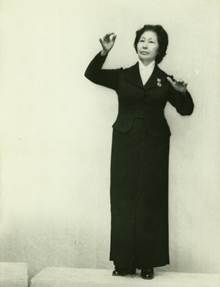
Fig.1. F.A. Baisheva Throughout her long life, Fevronia Alekseevna Baisheva wrote a lot about music, being its active propagandist and popularizer. She performed in the republican periodical press with an assessment of many musical phenomena of the republic. In this way, she supported a variety of forms of Yakutia's musical culture: from folk music, to academic forms of European-type musical professionalism, including choral performance, the work of Yakut composers, etc. With her journalistic activities, she largely filled in and anticipated the activities of future Yakut musicologists, whose shortage was particularly acute during the period of development of Yakut musical culture. Her work has not yet become the subject of specialized scientific study. Previously published generalizing works mention some information about the activities of the first Yakut professional choirmaster [3]. V.G. Nikulin's work briefly and in general terms examines the contribution of F.A. Baisheva to the development of choral art in Yakutia [5, pp.95-98]. The book by the author of these lines is dedicated to her work [6]. The listed works practically did not address the issues of studying her musical and journalistic heritage. The relevance of the research topic is due to the active processes of development of the musical culture of Yakutia at the present stage, the achievements of the last decades of which originate in the appeal to the experience of critical coverage of its history, created by its leading figures. In 2025, the musical community of the republic celebrated the 100th anniversary of F.A. Baisheva. The scientific understanding of her creative heritage, including the corpus of musical and journalistic articles, is very relevant today as an important documentary evidence of certain stages in the development of the musical culture of Yakutia, which determined the main vectors and ways of its development for many years to come. The purpose of the article is to classify the musical and journalistic heritage of F.A. Baisheva in Russian and Yakut, to identify its main issues and the relevance of the main ideas of the outstanding musical figure of the republic in the modern musical culture of Yakutia. The theoretical and methodological basis of the article is based on the materials of Russian researchers in this field of knowledge [1; 2; 10]. Modern works attach great importance to music journalism as an integral branch of the media sphere. [4; 7; 8; 9]. The scientific novelty of this study lies in the fact that for the first time the classification of F.A. Baisheva's musical and journalistic heritage, dating from the chronological period of the second half of the twentieth century - the beginning of the twenty-first century, has been carried out. Its main problems have been identified, a number of issues of which remain in demand in the modern musical culture of Yakutia. Musical and journalistic legacy of F.A.Baisheva The professional musical art of Yakutia began to develop rapidly with the advent of the Soviet government as part of its policy of developing the national cultures of the peoples of the north-east of the RSFSR, including the formation and development of the young professional art of the Yakut people. Already in the 1930s, the republican press began publishing notes and articles about the first musical productions and concerts of the Yakut National Theater. F.A. Baisheva's predecessors in this field of activity were her teachers and senior colleagues, in particular, the first professional pianist of Yakutia, P.K. Rozinskaya, who, after graduating from the Tchaikovsky Moscow State Conservatory, was assigned to the YASSR in 1940 in order to assist the young musical and theatrical business of Yakutia. One of the first musical figures who turned to writing articles about the musical art of the republic was the first Yakut composer, M.N. Zhirkov (Zhirkov M.N. How the music of the drama "Juluruyar Nyurgun Batyr" was created // Soc. Yakutia. 1941. January 19.) They also include the Soviet composer of Armenian origin, G.A. Grigoryan, who came to Yakutia to work, and others. The formation of the Yakut musical art from the second half of the 20th century was accompanied by the development of music journalism, one of their active authors, which since the second half of the 20th century was F.A. Baisheva (Fig. 2).
The journalistic legacy of F.A. Baisheva includes over sixty articles in Russian and Yakut, which were published in Russian and republican periodicals from the 1950s to 2010 - for about six decades. 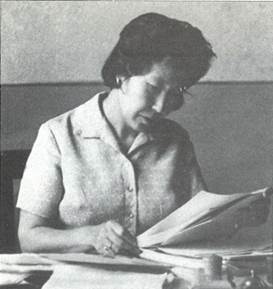
Fig.2. F.A. Baisheva at work The topics of the publications and their genre orientation are diverse. The following are identified as the main thematic areas of F.A. Baisheva's journalistic activity: 1. Articles on the development of the Yakut musical art; 2. Articles on the development of choral culture Yakutia; 3. articles on musical and aesthetic education of the population of the republic; 4. creative portraits of cultural and artistic figures of Yakutia; 5. Reviews of productions and concerts of the YAASSR Musical Theater (now the GTOiB RS (Ya).
Let us turn to the consideration of the most significant of them. Articles on the development of the Yakut musical art. One of the first journalistic works by F.A. Baisheva, the note "Letter from Yakutia", dated 1953, was published in the publication "Soviet Musician". The note is small, but it shows a clear civic position of the author, who is rooting for the fate of his native musical art. She demonstrates the position of the young choirmaster on the issue of attracting qualified specialists to the development of Yakutia's musical culture — graduates of the country's best conservatories. There were facts that indicated that a number of Moscow musicians who received a job assignment in Yakutsk in the 1950s neglected to fulfill their mission of providing professional assistance to the development of the young musical art of the northern republic, although their work was in high demand in the distribution areas (Baisheva F.A. Letter from Yakutia // Soviet musician. 1953. June 29).. This issue is also relevant today, when the Russian education system is being restructured, including in the field of culture and art, aimed at providing personnel, including specialists in musicians from remote regions of our country. If Yakutsk, the capital of the Republic of Sakha (Yakutia), is currently more or less provided with musicians, mainly of performing specialties (as a result of the activities of the Yakutsk Music College (college) named after M.N. Zhirkov and the Higher School of Music (Institute) named after V.A. Bosikov), then in the uluses of the republic, especially remote In particular, in the Arctic zone, there is still an acute shortage of teachers performing academic musical instruments, and especially choirmasters, concertmasters, teachers of solfeggio, music theory, etc. The article "Problems of the development of Yakut music" analyzes the state, problems and prospects of the development of the Yakut musical culture of the 1960s. The first professional choirmaster raises the issues of creating a national musical repertoire, the importance of developing modern Yakut music based on traditional musical culture, with an understanding of its internal patterns and stylistic features.: "We should not allow haste in our work, uncritical attitude to our work and the appearance of low-emotional and artistically weak works whose life is short. In art, success is determined not by the number of works created, but by their quality, their ideological and artistic value, and their ability to aesthetically influence listeners. In creating a national musical work, there should not be an accelerated process, that is, an artificial search for new things in the field of means of expression, but a way to accumulate vital material, long—term listening to the intonational way of life of the people," the author writes.(Baisheva F.A. Problems of the development of Yakut music // Soc. Yakutia. 1968. February 14). The disunity of musical and creative forces in the republic that took place during the period described leads the author to the idea of creating the Yakut branch of the Union of Composers of the RSFSR, which was subsequently opened eleven years later in 1979, as well as the need for targeted training of national musical personnel — singers, pianists, orchestras. She quite rightly notes that in order to receive professional performers in the coming decades, it is necessary to begin work on equipping the republic's music schools with qualified teaching staff with the opening of a head boarding school for gifted children. How far-sighted her statements turned out to be can be judged by the fact that in the 1990s, on the initiative of the first President of the Republic of Sakha (Yakutia), M.E.Nikolaev, the RS (Ya) Higher School of Music for Gifted Children was opened in the republic, whose activities to a certain extent begin to cover the staffing needs of the republic's music industry.
According to F.A. Baisheva, the Yakut Music College was the forge of middle-level specialists in Yakutia in those years, where the leading choirmaster of the republic proposed to increase the requirements for admission and the quality of education in order to increase the number of students entering the country's central universities. Fevronia Baisheva also raises the issue of increasing the staff of the Musical and Drama Theater - now grown to the level of the D.K. Sivtsev State Opera and Ballet Theater of the RS (Ya)-Suorun Omolloon, expanding its repertoire and improving the quality of productions, as well as the urgent need to create an orchestra of national instruments in the national republic, opening a workshop for their production, as well as the need to train performers on national instruments at the Yakut Music College. Currently, in the Republic of Sakha (Yakutia), at the National Dance Theater of the Republic of Sakha (Yakutia) named after S.A. Zverev-Kyyl Uol, there is an orchestra of national instruments with a workshop of national musical instruments included in this institution, developing the original creativity of Yakut masters of national instruments.including for professional stage activities. Training in the techniques of performing on Yakut modernized instruments is underway. Due to the shortage of musical notation and publications of Yakut composers, she raised the issue of setting up their production on the basis of the republican printing house. Thus, F.A. Baisheva in this article identifies a range of acute, urgent problems for Yakut music and suggests possible ways to solve them. The analytical material prepared by her becomes a kind of credo, a creative program for the development of musical art in Yakutia for many years to come, and it should be noted that it is relevant in a number of ways at the present time, in particular regarding the staffing of educational institutions of culture and art, the limited national repertoire, the availability of necessary information support, the publication of appropriate musical notation and methodological literature, especially works by Yakut composers, etc. Articles on the development of choral culture in Yakutia. Being the first professional national choirmaster, F.A. Baisheva completed the National department in 1951 (class of S.V. Popov, Honored Artist of the RSFSR), and subsequently completed the full course of the Conducting and Choral Faculty (class of Professor A.V. Preobrazhensky) Since 1961, she has worked as a choirmaster of the Yakut Radio Committee and as a teacher of choral disciplines at the conducting and choral department of the Yakut Music College, which opened with her arrival. The articles "Native folk art", "Fidelity to folk traditions", "Choral art, choral yrya tuhunan" ("About choral art and choral song"), "The song will find the way", "The song helps to build and live", "This sphere is not only gentle, but also necessary" are devoted to the following issues the development of choral culture in the republic, the republican choral movement (Baisheva F.A. Native folk art // Soc. Yakutia. 1983. 12 Jan.; Baisheva F.A. Fidelity to folk traditions // Soc. Yakutia. 1980. December 7; Baisheva F.A. "Choral art, choral art tuhunan"// Smoke. 1970. July 7th. in the Yakut language; Baisheva F.A. The song helps to build and live // Soc. Yakutia. 1984. May 23; Baisheva F.A. The song will find the way // The feast of Russian culture in Yakutia. Yakutsk, 1965; Baisheva F.A. This area is not only gentle, but also necessary. // Yakutia. 2004. 22 Jan.). The author presents the results of his analytical thought in a popular way. In an interview with F.A. Baisheva, as chairman of the Yakut Choral Society of those years, there were "Yakutskaiga yrya byraahynnyga" (Song Festival in Yakutsk), "Ringing tread of the festival", "Song helps to live", "Review of folk talents", "The song palette is rich", "Choral yrya competition" ("Choral Competition songs") consistently presents the facts about how in those years there were reviews, festivals of choral songs, and republican vocal and choral amateur performance (Baisheva F.A. Yakutskaiga yrya byraahynyga // Kyym. 1971. May 16. In Yakut. yaz.; Baisheva F.A. The ringing tread of the festival // Soc. Yakutia. 1976. June 28; Baisheva F.A. The song helps to live // Soc. Yakutia. 1982. March 5, Baisheva F.A. Review of folk talents // Soc. Yakutia. 1989. 2 Apr.; Baisheva F.A. The song palette is rich // Soc. Yakutia. 1990. 5 Apr.; Baisheva F.A. Chorovoi yry of the competition // Kym. 1991. April 19. In Yakut), which can be used to trace certain points in the history of the development of choral art in Yakutia. F.A. Baisheva highlights the problems of selecting a repertoire, forming their own style, improving their performing skills, improving the skills of their artistic directors, and reviving folk song traditions as the most important issues for the republic's choral groups. She believed that the main objectives of the Republican Choral society as a public organization designed to intensify the creative search for amateur groups are to introduce the masses to the inviolable artistic values of heritage, the best examples of national and modern musical art, as well as creating conditions for their creative expression. In addition to general issues of the development of choral culture in Yakutia, F.A. Baisheva devoted a number of articles to individual, most famous choirs of Yakutia: "Zveni, my song" is about the well—known Nayakhinsky choir, interviews "Chief Choirmaster" and "On the sea of music, under the sail of love" tell about the formation of the choir of the State Opera and Ballet Theater. (I), the short story "Concert without tickets", the interview "Both on the air and on stage", "The song is the soul of the people" tell about the Yakut radio choir, and the article "There was a lot of music" is about the work of this collective on Yakut television (Baisheva F.A. Zveni, my song // Rep. Sakha. 1996. 23 Jan.; Baisheva F.A. Chief choirmaster // Maestro. Yakutsk, 2000; Baisheva F.A. On the sea of music, under the sail of love // Rep. Sakha. 1996. May 18.; Baisheva F.A. Concert without tickets // Yakut radio broadcasting. Yakutsk, 2000; Baisheva F.A. Both on the air and on stage // Soc. Yakutia. 1982. November 20; Baisheva F.A. In the song — the soul of the people 1987. // Soc. Yakutia. November 17; Baisheva F.A. There was a lot of music // 40 years of Yakut television of NBC Sakha. Yakutsk, 2003). F.A. Baisheva hosted radio cycles of the radio programs "Music of the Renaissance", "Concert of Classical Music", "Songs of Soviet composers", "Your favorite songs", "In a united family", "Yakut songwriters", as well as television programs for the education of children and youth. like, for example, the cycle "The Secret of the Five rulers", etc.
Fevronia Alekseevna paid great attention to the activities of children's choral groups. This is evidenced by her articles "The Northern Nightingale — about the Neryungri music and choral school, as well as "Walattar khordara - hara muora bierager" ("Boys' Choir - on the seashore") and "About the boys' choir school" (Baisheva F.A. Severny "Solovushka" // Rep. Sakha. 1996. May 21.; Baisheva F.A. Walattar khordara — hara muora bierager // Sakha shire. 1996. October 2. In the Yakut language; Baisheva F.A. About the boys' choir school // Boys' Choir School. Moscow, 1997). The boys' choir was created on the initiative of the first President of the Republic of Sakha (Yakutia) M.E. Nikolaev, who elevated the artistic and aesthetic education of the children of the republic and work with gifted children to the rank of state cultural policy. In the republic, up to the 70s of the XX century, there were practically no traditions of academic choral singing by boys. The Boys' Choir of the Republic of Sakha (Yakutia), where F.A. Baisheva worked as a chief consultant, performed in the chapel hall of the Russian State Pedagogical University named after A.I. Herzen, at the I International Slavic Congress of Choirmasters of Children's and Youth Choirs, at the Gnessin Russian Academy of Music, the Varna Festival, the Vienna Festival dedicated to the 200th anniversary of F.A. Baisheva.Schubert, as well as in Bulgaria, Austria, France, Italy, Spain. This indicates that the boys' choir of the Republic of Sakha (Yakutia) has received national, Russian and foreign recognition. This team, funded by the funds of the Foundation of the President of the Republic of Sakha (Yakutia) "Barkyyy" was closed in 2004 and currently this niche of performing activity remains unoccupied, which is quite difficult in the current economic situation without the attention and appropriate state support of executive authorities in the field of culture and art. A number of F.A. Baisheva's materials, such as, for example, "Kilyhah tuhunan osso biirde" ("Once again about kilyhah"), "Kyayyy Syrdyk daralyga" ("The Bright Radiance of Victory"), are devoted to the issues of folk songwriting, the peculiarities of the national manner of singing, sound formation and intonation. So, she touched upon the problem of kilyhakh, a special falsetto sound that gives the performing art of singing Yakut folk singers a characteristic ethnic expressiveness (Baisheva F.A. Kilyhakh tuhunan osso biirde // Kyym. 1982. March 31. In the Yakut language; Baisheva F.A. Kyayyy syrdyk daralyga // Archy. 1985. May 11th. In Yakut). Articles on musical and aesthetic education of the population of the republic. In the article "To know the spiritual heritage" and in the interview "Let's talk about music", she raises the problem of musical and aesthetic education of the general population and, above all, children, youth, students and working youth, the formation of aesthetic criteria for them, allowing them to navigate a variety of musical styles, trends and trends (Baisheva F.A. To know the spiritual heritage // Social. Yakutia. 1990. January 6; Baisheva F.A. Let's talk about music // Youth of Yakutia. 1986. December 18). She emphasized the role of radio and television, the so-called folk music universities (in particular, one of them was organized by the Honored Artist of the RSFSR G.M. Krivoshapko, under whose direction the Yakut Gosteleradio Orchestra gave free symphonic concerts). In this regard, F.A. Baisheva emphasizes that musical and aesthetic education should begin in kindergarten, where playful forms of folklore will be given the necessary “inoculation” so that people from childhood know, understand and love folk traditions, games, songs, dances. She quite rightly raised the question of why our children should know foreign pop ensembles and their songs better than classical and folk music. “Unsatisfactory work on the education of young people, including music," she believed, "generates such a dangerous phenomenon as lack of spirituality, lack of need for moral improvement, and this is a path to personal degradation.” We can judge how right the author was by the state of affairs in the field of culture in the modern post-Soviet space, when in a matter of years a huge positive experience that had been accumulated for many decades was lost. Currently, the ideas of musical and aesthetic education in Yakutia are being implemented in the implementation of the republican project "Music for All", which was also initiated by the first President of the Republic of Sakha (Yakutia) M.E. Nikolaev and this year has crossed the threshold of the second decade. It develops the issues of children's music making in the system of secondary educational schools based on the material of classical music, as well as the musical traditions of the peoples of the Russian Federation and the RS (Ya). Creative portraits of musical artists of Yakutia. F.A.Baisheva is the author of not only analytical articles, but also creative portraits of Yakut musicians in the republican periodical press. She is connected by kind and fruitful cooperation with many of her prominent figures, who are now classics of the Yakut musical art, whose names are forever inscribed in its history.
This is how she wrote memoirs about the first Yakut composers Mark Zhirkov — "Bastaky the national Composer" ("The First national composer"), Hrant Grigoryan — "Pure bright talent" and "Amazing, bright G.A. Grigoryan and his Yakut choral music", popular melodists Zakhar Vinokurov — "Bastaky harachchy the author" ("The Author the first swallow") and Fedor Lobanov — "With a song for life", about the first Yakut professional vocalists Anastasia Lytkina — "Anastasia Lytkina sings" and "Some touches from the life of the wonderful singer Anastasia Lytkina", Ai Yakovleva — "Talented vocalist", Alyona Ippolitova — "Facets of talent", folklore improvisers Sergei Zverev — "Urduk kotuleh yryahyt" ("High—flying Singer") and Ustina Nokhsorova — "Utuken kihi ete" ("He was an honored man"), the first national opera director Anna Egorova — "The Many Colors of Talent", pianists Polina Rozinskaya — "Kiniehe ananar- dion-serge mahtala" ("Her dedicated to the love and gratitude of the people"), "A life devoted to music" and Aiza Reshetnikova — "Congratulations on the anniversary", about a professional musician exiled in the 40s of the last century to Yakutia, the choirmaster of the Yakut radio, Herman Perelstein, who transferred F.A. Baisheva to the management of the choral group, in an interview with "Three Links and the meaning of life" (Baisheva F.A. Bastaky national composer // Kyym. 1967. 8 Apr. In the Yakut language; Baisheva F.A. Pure bright talent // Soc. Yakutia. 1989. 14 Apr.; Baisheva F.A. Amazing, bright G.A. Grigoryan and his Yakut choral music // Hrant Grigoryan. Yakutsk, 2000; Baisheva F.A. Bastakycharachchy of the author // Brought congratulations on the Yakut song. Yakutsk, 2003. In Yakut. yaz.; Baisheva F.A. With a song about life // Caring – Archy. 2005. May 26; Baisheva F.A. Anastasia Lytkina sings // Soc. Yakutia. 1985. 13 Apr.; Baisheva F.A. Some touches from the life of the wonderful singer Anastasia Lytkina // Worrying, bowing to beauty... Yakutsk, 1998. In the Yakut language; Baisheva F.A. Talented vocalist // Aya Yakovleva: bibliographer. indicator. Yakutsk, 1976; Baisheva F.A. Facets of talent // Caring Archy. 2005. May 26; Baisheva F.A. Urduk kotuleh yryahyt // Zverev D.S. The cherished word about the father. Yakutsk, 1995. In the Yakut language; Baisheva F.A. Utuken kihi ete // Folk singer Ustin Nokhsorov. Yakutsk, 2007. In Yakut. yaz.; Baisheva F.A. The many colors of talent // Light path. Yakutsk, 2007. In the Yakut language; Baisheva F.A. Kiniehe ananar — dion-serge mahtala Sakha shire. 2007. 28 Aug. In Yakut. yaz.; Baisheva F.A. A life devoted to music // Caring-Archy. 2007. 30 Aug.; Baisheva F.A. Congratulations on the anniversary // Hey. 2000. February 18; Baisheva F.A. Three links and the meaning of life // Vilnius, 1993, No. 1.). Popularization of the work of a few musical figures at that time: Russian – who came to the remote northern republic to raise its culture and art, national - each of whom was a pioneer of a particular field of musical art in Yakutia, like F.A. Baisheva herself, serves as an example of dedication to the music industry in the best traditions of guild collegiality and professional cooperation. Reviews of productions and concerts of the YAASSR Musical Theater (GTOiB RS (Ya). Fevronia Baisheva also wrote reviews of concerts and musical performances that took place at the YAASSR Musical Theater. In the article "Flower of the North" Rebirth", she wrote the following about the experience of staging the first Yakut operetta by G.A. Grigoryan: "There are no complicated vocal parts in The Flower of the North, nevertheless, for many performers it ... was a kind of debut in the operetta genre. To successfully embody such musical and scenic material, it is not enough just to sing beautifully, you need to move well, dance freely, and be able to convey to the listener all the details of the witty text. Undoubtedly, this requires long and painstaking rehearsal work. The creation of a vocal image is inseparable from the stage image, but still ... if the singers mostly coped with the vocal parts, then everything is still not smooth and interesting from the acting side" (Baisheva F.A. "Flower of the North" rebirth // Soc. Yakutia. 1979. June 16). She wrote a review about the concert by Aya Yakovleva and Vyacheslav Loginov, "An immense range of feelings," where F.A. Baisheva noted that "Aya Yakovleva conducted her program professionally, but I would like to see more emotion and delicate nuances in her performance. In this sense, the listeners were less moved by Iolanthe's aria, as well as the Verses from the opera The Enchantress ... (Baisheva F.A. An immense range of feelings // Soc. Yakutia. 1980. June 20th). The reviewer, noting the professionalism of the Honored Artist of the RSFSR, the freedom and ease of her performance, diction clarity, fruitful work on the classical repertoire and the creation of vivid stage images, nevertheless believes that the vocalist has certain moments to improve her performing skills. She further writes that "...Vyacheslav Loginov has a small but "flying" voice that sounds smoothly in the middle register. The singer's desire to cover a wide range of repertoire is commendable. Loginov performed a solo program three times in a short period of time. In his performance, the audience got acquainted with a number of popular opera (tenor) arias, arioso, cavatinas and romances of Russian and Western classics" (Baisheva F.A. An immense range of feelings // Soc. Yakutia. 1980. June 20th). The author reveals the truthfulness of intonation, the sincerity of feelings embodied by a young but growing singer. His performance of Radames' romance from the opera "Aida" by Verdi deserved high praise, but at the same time F.A. Baisheva believes that for the arioso Othello from the same opera by the same composer V.Loginov lacked the breadth of his vocal range and a higher level of vocal skill. The material "Urde-kotute turuoha" ("It will continue to please"), written in the Yakut language, is dedicated to a solo concert by the famous Yakut baritone Alexander Samsonov, a former graduate of the Tchaikovsky Moscow State Conservatory. (class of honored artist of the RSFSR D.Gamrekeli). The reviewer noted the vocalist's successful holding of an event responsible for the opera singer's creative biography, referring to a retrospective of a number of his other concerts. She sets other performers as an example of the activity and effectiveness of his work (Baisheva F.A. Urde-kotute turuoha // Kyym. 1989. 29 Apr. In Yakut).
Thus, the author of these reviews does not aim to identify only positive aspects in concert performances and premiere screenings of the artists of the YASSR Musical Theater, but objectively, from a professional perspective, evaluates their creative achievements and identifies those points that, in her opinion, require further work, which indicates the objective approach of F.A.Baisheva and high the requirements of her expert assessments of the performing skills of Yakut vocalists. Conclusions 1. The first Yakut professional choirmaster, F.A. Baisheva, in addition to her successful practical work as a choral conductor, was an active actor in the musical and historical process in Yakutia, the author of numerous authoritative publications, who built fruitful communication links with her readership and conducted educational and educational work with her, contributing to the development of musical culture in the republic. 2. During the period under study, she wrote over sixty analytical articles, creative portraits, informational reviews, music-critical reviews, etc. in Russian and republican periodicals. 3. F.A. Baisheva contributed to the formation of tastes and public opinion about the musical culture of Yakutia, provided its leading figures – academic vocalists, folklore performers, composers, instrumentalists, choral conductors, etc. - with the necessary information support. 4. Being a highly professional musician who graduated from the country's leading music university, the Tchaikovsky Moscow State Conservatory, she has been acting as an expert specialist for many years, identifying both common problems and prospects for the development of musical culture Yakutia, which in many ways have turned out to be relevant today, as well as its individual branches, in particular, choral performance. 5. Her observations, assessments of the development of the republic's musical culture in the second half of the twentieth century to the first decade of the twenty-first century, and critical remarks set out in the musical and journalistic heritage she created are significant and valuable material for further research and development of the musical culture of Yakutia.
The article is published in its final version as approved following the last positive peer review recommending acceptance for publication. It incorporates revisions made by the author in response to prior negative peer review reports that did not recommend publication. All peer review reports, including initial negative reviews, are published in open access alongside the article. All versions of the author’s revisions are archived in the publisher’s repository and may be made available upon reasonable request in accordance with Elsevier’s editorial policies and applicable data availability requirements.
Read all reviews on this article
References
1. Asafyev, B. V. (1980). On choral art. Muzyka.
2. Bogdanov-Berezovsky, V. M. (1963). Pages of musical journalism: Essays, articles, reviews. Muzgiz.
3. Golovneva, N. I. (1994). The formation of Yakut professional musical culture (1920–1985). Nauka.
4. Lyakh, V. I., & Arakelyan, N. G. (2017). The place of musical art in contemporary society and features of its study in cultural studies discourse. Society: Philosophy, History, Culture, 11, 121-125. https://doi.org/10.24158/fik.2017.11.25
5. Nikulin, V. G. (2010). Paths of formation and development of choral culture in Yakutia: Creativity, performance, education. TsUMORI Press.
6. Pavlova-Borisova, T. V. (2016). The first professional Yakut choirmaster. Bichik.
7. Ptushko, L. A. (2010). Musical journalism: From theory to practice. Problems of Philology, Cultural Studies and Art History, 1, 117-121.
8. Sverdlov, P. L. (2007). Musical journalism as a phenomenon of the contemporary media space. Bulletin of the Belarusian State University. Series 4: Philology, Journalism, Pedagogy, 3, 88-93.
9. Semenova, A. E. (2014). Trends in the development of musical journalism in Russia from the late 19th to the early 21st century. Proceedings of Kazan University. Humanities Series, 156(6), 121-127.
10. Khubov, G. N. (1976). Musical journalism of different years: Articles, essays, reviews. Sovetsky Kompozitor.
11. Shanina, V. (2024). Musical journalism: Functions, objectives, and role. The Age of Information, 8. https://doi.org/10.33941/2618-9291.2025.27.2.003
First Peer Review
Peer reviewers' evaluations remain confidential and are not disclosed to the public. Only external reviews, authorized for publication by the article's author(s), are made public. Typically, these final reviews are conducted after the manuscript's revision. Adhering to our double-blind review policy, the reviewer's identity is kept confidential.
The list of publisher reviewers can be found here.
The subject of the research is the musical and journalistic heritage of the People's Artist of the Republic of Sakha (Yakutia), Honored Artist of the RSFSR Fevronia Alekseevna Baisheva. F.A. Baisheva's articles devoted to the national musical art of Yakutia, the professionalization of musical activity in the republic and other musical and theoretical topics are divided by the author into thematic headings and receive a brief description of the content. Undoubtedly, the popularization of the theoretical and journalistic creativity of the author, who has been engaged in the development of national musical art throughout his professional career, is important. However, at the beginning of the work, the author admits a number of theoretical inaccuracies that need to be corrected before the text can be published in a scientific publication. Firstly, the author's identification of "scientific novelty" and "relevance of research" is a gross violation of scientific logic. Unfortunately, the author considers these two sections to be one-dimensional scientific headings: "The scientific novelty and relevance of this research consists in studying the musical and journalistic heritage ...". The relevance of the research topic should contain a correlation of the topic of the article with the problems that are in demand in the modern scientific agenda; scientific novelty is the author's original contribution to the development, analysis, interpretation, etc. of these topical issues. Therefore, these two important headings for scientific work need to be rewritten. In one of the paragraphs, the author makes an attempt to return to the topic of relevance and writes: "The relevance of the study is related to the fact that the musical community of the republic celebrated the 100th anniversary of the first professional Yakut choirmaster in 2025.". Any anniversary date is more an occasion than a reason for relevance. The scientific challenge and requirement in this area is most likely the need to establish cultural identity in the Sakha Republic, and the work of such creators as F.A. Baisheva is one of the cultural markers of identity. Secondly, the purpose formulated in the text is more suitable for abstracts, rather than for articles published in scientific publications: "to consider the musical and journalistic legacy of F.A. Baisheva." It is necessary to clarify the context in which these works are analyzed, or to formulate the goal as the creation of a typology, classification of F.A. Baisheva's works. But the "consideration" of the author's musical and journalistic heritage cannot claim to be a full-fledged scientific study. The entire text of the article's introduction gives the impression of somewhat disparate material. Some sentences are taken out of context: "There is no kind of research on music journalism in Yakutia." Therefore, the entire first part of the text, the Introduction, requires serious reworking, both stylistically and meaningfully. The author's constant use of the phrase "the first Yakut professional choirmaster" is also somewhat intrusive. This professional affiliation is indicated in the title of the work, and then only in one introduction the author uses this characteristic 4 times. Given that the article does not deal with the work of F.A. Baisheva as a choirmaster, but rather with her musical and journalistic works, such a clarification is inappropriate. It is enough to indicate in the title the professional affiliation of F.A. Baisheva. The second section of the text, the Musical and journalistic legacy of F.A.Baisheva, does not cause any comments on the content. But stylistic correction is necessary, there are sentences with inconsistent endings or omission of prepositions. Another technical note is that the article presents two drawings and photographs by F.A. Baisheva. Both photos are titled fig. 1 and Fig. 2. However, there are no references to these figures in the text itself. The text is written in a purely scientific language, is logically structured and may be of interest to specialists in the field of music journalism, as well as art historians and cultural scientists. However, it is necessary to present the sections "relevance", "novelty" and "research objective" in accordance with the requirements for scientific papers. The article is recommended for publication after revision.
Second Peer Review
Peer reviewers' evaluations remain confidential and are not disclosed to the public. Only external reviews, authorized for publication by the article's author(s), are made public. Typically, these final reviews are conducted after the manuscript's revision. Adhering to our double-blind review policy, the reviewer's identity is kept confidential.
The list of publisher reviewers can be found here.
The subject of the research is the musical and journalistic heritage of the People's Artist of the Republic of Sakha (Yakutia), Honored Artist of the RSFSR Fevronia Alekseevna Baisheva. F.A. Baisheva's articles devoted to the national musical art of Yakutia, the professionalization of musical activity in the republic and other musical and theoretical topics are divided by the author into thematic headings and receive a brief description of the content. Undoubtedly, the popularization of the theoretical and journalistic creativity of the author, who has been engaged in the development of national musical art throughout his professional career, is important not only for regional studies, but also for Russian musicology in general. The author emphasizes that the relevance of the issue is related to the dynamic development processes of both the theoretical and practical components of the musical culture of Yakutia in our days. An undoubted scientific novelty is the classification of F.A. Baisheva's creative heritage and the definition of her contribution to the formation and development of individual segments of musicological knowledge. It is significant that the purpose of the study is to classify the works of F.A. Baisheva, written in both Russian and Yakut languages, which makes it possible to introduce texts that were previously restricted in access into common scientific use. The research methodology is based on a musical analytical approach complemented by special concepts from the field of music journalism. The author identified five main directions in the works of F.A. Baisheva and presented an exhaustive description of the achievements of F.A. Baisheva, an analysis of the directions in regional music science, on which the works of F.A. Baisheva had a significant impact. In total, the author has analyzed over sixty analytical articles, creative portraits, informational reviews, music-critical reviews, etc. in Russian and republican periodicals. The most valuable conclusions are the author's arguments about the importance of the contribution of F.A. Baisheva's works to the formation of professional choral art in the republic. F.A. Baisheva's texts dealt not only with special issues of conducting, but they popularized national choral groups, explored their concert activities, and comprehended their contribution to the formation of classical musical culture in the republic. The author of the article also highly appreciates the contribution of F.A. Baisheva to music journalism, i.e. her work both informed the reader about events in the world of music, and enlightened, set values for the population in the field of musical art and music education. The text is written in a purely scientific language, and the author demonstrates a fairly high level of research competence in this area. The text of the article is logically structured and contains all the sections necessary for scientific publication. The conclusions of the article expand the subject field of Russian musicology and may be of interest to specialists both in the field of music journalism and art historians. The article fully complies with the requirements for scientific publications.
|





 © 1998 – 2026 Nota Bene. Publishing Technologies. NB-Media Ltd.


