Security Issues
Reference:
Nikolaev, N.V., Egurnov, V.O., Il'in, V.V., Sokolov, A.M. (2025). Electro-optical suppression of cameras on autonomous unmanned aerial vehicles with intelligent computer vision systems. Security Issues, 4, 53–74. https://doi.org/10.25136/2409-7543.2025.4.77117
Electro-optical suppression of cameras on autonomous unmanned aerial vehicles with intelligent computer vision systems
Nikolaev Nikolai Vladimirovich
PhD in Economics
Staff member; Russian Federation Security Guard Service Federal Academy
35 Priborostroitelnaya str., Orel, Sovetsky district, Russia, 302020

|
nnv85nikolas@list.ru
|
|
 |
Egurnov Vladimir Olegovich
PhD in Technical Science
Staff member; Russian Federation Security Guard Service Federal Academy
35 Priborostroitelnaya str., Orel, Sovetsky district, Russia, 302020
|
|
egurnov77@list.ru
|
|
 |
Il'in Vladimir Viktorovich
PhD in Technical Science
Staff member; Russian Federation Security Guard Service Federal Academy
35 Priborostroitelnaya str., Orel, Sovetsky district, Russia, 302020
|
|
w.ilin82@yandex.ru
|
|
 |
|
Sokolov Artem Maksimovich
Staff member; Russian Federation Security Guard Service Federal Academy
35 Priborostroitelnaya str., Orel, Russia, 302020
|
|
sokol.sam@gmail.com
|
|
 |
|
DOI: 10.25136/2409-7543.2025.4.77117
EDN:
VROVMS
Received:
12/04/2025
Published:
01/04/2026
Abstract: This study focuses on countering autonomous unmanned aerial vehicles (UAVs) equipped with intelligent computer vision systems. The subject of the research comprises methods and techniques for countering modern UAVs. The aim is to advance methods for countering UAVs, specifically in the domain of electro-optical suppression of cameras on autonomous UAVs with computer vision systems by employing low-power lasers. The article presents experimental results confirming the feasibility of electro-optically suppressing optical devices using a low-power laser. Furthermore, an assessment is provided of the dazzling effect when a laser beam strikes a camera – capable of recognizing a human in the frame via custom-developed software based on a neural network model from the YOLO family – at various angles. The methodological basis of this research is formed by experiment and measurement. The work employs systems analysis methods. The authors describe the most significant malfunctions occurring during the electro-optical suppression of optical devices that utilize artificial intelligence algorithms. Based on the conducted analysis, a classification of failures during the blinding of cameras on UAVs with intelligent computer vision systems has been developed. A review of low-power laser systems, which can serve as technical means for the electro-optical suppression of autonomous UAVs, is presented. The results obtained in this work may form the basis for research aimed at creating new counter-UAV subsystems within physical protection systems. The scientific novelty of the work lies in its contribution to the development of a scientific and methodological framework for substantiating the physical protection systems of critical facilities, specifically regarding the enhancement of methods and techniques for countering modern unmanned aerial systems based on the application of low-power lasers for the electro-optical suppression of cameras on autonomous UAVs with computer vision systems.
Keywords:
unmanned aerial vehicle, UAV, countering autonomous UAVs, computer vision system, neural network models, electro-optical suppression, low-power laser system, laser dazzling effect, experimental results, failure classification
This article is automatically translated.
Introduction Currently, the search for ways to counter unmanned aerial vehicles (UAVs) is one of the important problems of ensuring the defense and security of the Russian Federation [1, 2]. This is due, on the one hand, to the continuous development of these tools in the direction of achieving high flight performance, the introduction of new principles of control and data transmission, the use of an extensive range of payloads, on the other - their widespread use in the area of a special military operation to solve reconnaissance, strike and other tasks. In addition, the availability of ready-made technical solutions, modernization tools and components for modern UAVs, as well as the presence of significant technical and tactical reserves, allows them to hit various objects on the territory of the Russian Federation [3, 4]. Current trends in the development of UAVs involve the introduction of artificial intelligence algorithms for autonomous flights, automatic detection, capture and destruction of targets. These products are not sensitive to the currently most common means of electronic suppression of control channels and data transmission. In this regard, the search for ways to neutralize such threats is an important research task. At the same time, the widespread use of UAVs and their relatively low cost determine the need to create inexpensive but effective countermeasures. To this end, research is currently underway in the field of electromagnetic, laser, and mechanical effects on modern UAVs [3-5]. Of these areas, one of the most promising, but not widely used, is the use of laser weapons. Depending on the density of the laser radiation flux, functional damage to UAVs and optoelectronic suppression of UAV optical devices are distinguished [4]. The analysis of publications [3-8, 10-12] allows us to conclude that the method of functional damage to UAVs by laser radiation is characterized by a certain degree of sophistication. The results of evaluating the effectiveness of its use are described in [3, 11]. In turn, the issues of optoelectronic suppression of UAV optical devices have not found their complex reflection. This determines the relevance of the conducted research. This article is devoted to the issues of optoelectronic suppression of cameras of modern UAVs. The method under consideration is based on the effect of laser radiation on the camera, which leads to its temporary blinding or irreversible damage. The technology can be quite effective against first-person video-controlled devices (FPV drones), as well as autonomous UAVs using an intelligent computer vision system to detect and capture targets. In the latter example, the directional light beam is capable of disorienting the onboard artificial intelligence, which leads to the loss of the target (disruption of the task) and thereby reducing the effectiveness of the UAV. Taking into account the above, the purpose of this article is to develop methods of countering UAVs in terms of optoelectronic suppression of autonomous UAV cameras with a computer vision system by blinding with a low-power laser as part of improving the scientific and methodological apparatus for substantiating physical protection systems for objects. In this regard, in order to achieve the purpose of the study, we present the experimental results demonstrating the possibility of optoelectronic suppression of optical devices by a source of low-power coherent radiation. Consider the malfunctions that occur when blinding UAV cameras with an intelligent computer vision system. We will analyze the technical means that implement optoelectronic suppression technology to counter modern UAVs.
1. Results of an experiment on optoelectronic suppression of optical devices by a source of low-power coherent and incoherent radiation Optoelectronic suppression is radio-electronic suppression in the ranges of infrared, visible and (or) ultraviolet waves, which consists in reducing the efficiency of optical devices by exposing them to directional optoelectronic interference. It was established in [6] that optoelectronic suppression of optical devices at distances from 100 to 2000 m can be carried out both by emitters with coherent radiation sources based on diode-pumped solid-state lasers of industrial production, and by incoherent radiation sources based on powerful short-arc xenon lamps, which are energetically equivalent narrowly focused emitters. In addition, it was determined that coherent and incoherent broad-beam radiation sources can be used to protect a given sector of an object from potential threats associated with the use of modern UAVs at short distances by aiming the beam at the center of the sector. In the case of narrow-angle emitters, accurate targeting data is required to dazzle the cameras. It should be noted that an extremely narrow beam is practically not applicable, since at close distances, due to the small diameter of the beam, high requirements are placed on guidance accuracy [6]. The results of the analysis of the possibilities of coherent and incoherent radiation sources for the formation of optical interference [3, 6, 7, 12], as well as the characteristics of typical UAV cameras, which may be subject to optoelectronic suppression [3, 8], led to the conclusion that to solve the problem of countering autonomous UAVs using computer vision To detect and capture a target, it seems sufficient to use relatively low–power coherent radiation sources - lasers. In order to confirm the assumption, a series of practical experiments on optoelectronic suppression of optical devices was carried out, including: – blinding of the camera when directly exposed to coherent and incoherent radiation from distances of 10, 30 and 50 m; – blinding of the camera when exposed to coherent and incoherent radiation at angles of 30 °, 60 ° and 80 °; – assessment of the effects of coherent and incoherent radiation on a camera capable of recognizing (human) images in a frame using a developed software tool based on the neural network model of the YOLO family.
Two lasers with parameters were used as coherent radiation sources: the first with power < 1 MW and a wavelength of 650 nm (red radiation), the second power < 100 MW and a wavelength of 532 nm (green radiation). The source of low–power incoherent optical radiation in the experiment was a hand-held LED flashlight with the following characteristics: LED model – PM 30–TG, maximum luminous flux – 5200 lumens, LED power - 10 W, thermodynamic temperature - 6000 K. The laptop camera was subjected to optoelectronic suppression from distances from 10 m to 50 m at angles of radiation sources to the optical device from 0 ° to 80 °. During the first experiment, the following results were obtained (Figure 1). Experience with a laser having a wavelength of 650 nm (red radiation) has shown that when exposed from a distance: – The 10 m image on the frame is almost completely illuminated, it is not possible to determine the surrounding objects in the field of view. In the immediate vicinity of the camera, the ceiling lamp and the outlines of the doors are barely discernible.; – 30 m doorways, the contours of the ceiling and the lamp on it are clearly defined, but only at a large angular distance from the center of the beam. The central part of the frame is completely illuminated, and objects cannot be identified.; – 50 m in the image, interior details are distinguishable except for objects located in close proximity to the axis of the laser beam.

Figure 1 – Blinding of the camera when directly exposed to a source of coherent and incoherent radiation from distances of 10, 30 and 50 m
The experiment with the second laser showed blinding of the camera at all distances, since initially the output power of the coherent radiation source with a wavelength of 532 nm (green radiation) is greater (Figure 1). It should also be noted that green radiation is perceived by humans 5-7 times brighter than red at the same output power. This is due to its proximity to the wavelength of 555 nm, at which the human eye is most sensitive in daylight (at dusk and darkness – 505 nm). Only at a distance of 50 m it is hardly possible to distinguish the doorway, which is located in the immediate vicinity of the camera. Experience with a handheld LED flashlight (Figure 1) has shown that when exposed to: – distances of 10 m interior details (doorways, ceiling lights) placed at a large angular distance from the center of the beam are quite distinguishable; the central part of the card is fully illuminated; – at distances of 30 m and 50 m, almost the same results are observed: all interior elements are clearly distinguishable; only that part of the frame where the source of optical interference itself was located turned out to be fully illuminated. The second experiment allowed us to evaluate the possibility of blinding the laptop camera by exposure to a source of coherent and incoherent radiation at angles of 30 °, 60 ° and 80 ° from a distance of 15 m (Figure 2).

Figure 2 – Blinding of the camera when exposed to coherent and incoherent radiation at angles of 30 °, 60 ° and 80 °
The experimental results showed (Figure 2) that when exposed to a coherent radiation source with a wavelength of 650 nm at an angle of 30 ° to the camera, only one third of the frame was illuminated (from the laser location). There are noises in the rest of the frame, but all the interior elements are clearly distinguishable. When exposed to radiation at angles of 60 ° and 80 °, there are only small noises that practically do not distort the image. An experiment with a coherent radiation source with a wavelength of 532 nm allowed us to conclude that at a beam angle of 30 degrees, the laptop camera is completely blinded. At angles of 60 ° and 80 °, only the ceiling lights become distinguishable, while the rest of the interior elements cannot be distinguished. As a result of an experiment with an incoherent radiation source, it was determined that when exposed to radiation at an angle of 30 degrees, the laptop camera is slightly blinded (the diode lamp is located on the left), which does not interfere with the recognition of the depicted objects. There is no illumination of the frame during optoelectronic exposure at angles of 60 ° and 80 °. To implement the third experiment, a mock-up of a video analysis and image recognition software tool based on the YOLO v8 neural network model was developed. It is characterized by the following features [9]: – relatively high speed of neural network pattern recognition algorithms; – by searching for objects in the frame in real time; – a large database of classified images; – the ability to calculate the probabilities of predicting objects. The choice of the neural network model of the YOLO family is due to the fact that it is most often used on board modern UAVs [13]. It should be noted that along with this model, other architectures are used that are optimized for operation in conditions of limited computing resources (Table 1). The software layout developed for the experiment is capable of performing the following tasks: – detection (determination of the presence of objects in the frame corresponding to the classifier of the neural network); – classification (determining the type of object in the frame, according to the classifier of the neural network); – localization (search for the location of objects in the frame and their number).
Table 1 – The main neural network models used on board autonomous UAVs | Model name | Key Features | Model assignment | | YOLO (You only look once) | High-speed real-time operation, which is critical for flight | Detection and classification of objects (people, etc.), navigation, obstacle avoidance | | Tiny-YOLO (lite version of YOLO) | Simplified architecture to save computing resources and energy consumption | Used on on-board computers with limited power | | EfficientDet | It uses an improved version of the standard BiFPN feature Pyramid network to efficiently detect objects of different sizes. It has high accuracy | Object recognition in aerial photographs, where accuracy in detecting small targets is important (for example, for vehicle detection and classification) | | SqueezeDet | The unified, compact architecture is specifically designed for isolated systems. Extremely small model size and power consumption | UAV autopilots, where the critical parameters are response speed and autonomy | | ResNet (Residual Neural Network) is the basis for some models |
High recognition and classification accuracy. Significant computational costs, low operating speed, requires optimization for UAVs | Object recognition and classification, for example, when identifying specific military targets or complex infrastructure facilities | | SSD (Single Shot MultiBox Detector) developed based on the ResNet-50 model | It uses multiscale feature maps that capture information in different resolutions, which makes it possible to efficiently detect objects of different sizes. | Detection and localization of objects in images or video frames | | Additional algorithms used on board autonomous UAVs | | Convolutional Neural Networks (CNN) | The basis for image classification and feature extraction | Classification of objects, such as "vehicle", "pedestrian", etc. | | SLAM (Simultaneous Localization and Mapping) | Algorithms that combine the construction of a terrain map and the control of the location and the traveled path of the UAV on it | Navigating in an unfamiliar environment, building 3D maps | | DeepSORT tracker based on YOLO | The algorithm for tracking objects according to the sequence of frames. Works well with multiple objects | Real-time tracking of moving objects (targets) | | The ByteTrack tracker based on YOLOX
| The algorithm for tracking objects according to the sequence of frames. High tracking accuracy | Tracking moving objects (targets) that are partially obscured or poorly visible |
To conduct an experiment to assess the effects of coherent and incoherent radiation on a camera capable of detecting human images in a frame, the YOLO v8 neural network model was configured so that an object is considered detected if the probability of its prediction is higher or equal to 0.5. The camera lens was illuminated at angles of 0 °, 30 ° and 60 °. The distance from the light source to the camera lens is 15 m. The results of the experiment are illustrated in Figure 3. The analysis of the video materials at the end of the experiment showed that: – when the camera lens was blinded by a coherent radiation source with a wavelength of 650 nm at angles of 0 ° and 30 °, the developed software layout was unable to recognize the human image. However, when analyzing the image at the moment of exposure at an angle of 30 °, the object is clearly visible. At an angle of 60 °, the neural network algorithms of the YOLO v8 model made it possible to accurately recognize the human image; – when the camera lens was blinded by a coherent radiation source with a wavelength of 532 nm at angles of 0 °, 30 ° and 60 °, it was not possible to recognize human images using the developed software layout.; – only when exposed to an incoherent radiation source at an angle of 0 °, the neural network algorithms of the YOLO v8 model are unable to recognize the human image.

Figure 3 – Assessment of the effects of coherent and incoherent radiation on a camera capable of detecting human images in a frame
Thus, the conducted series of experiments confirmed the possibility of optoelectronic suppression of optical devices by a relatively low-power coherent radiation source. The results achieved do not contradict the conclusions obtained in [6, 12]. In addition, the results of an assessment of such an impact on a camera capable of recognizing a human image in a frame using a developed software tool using the YOLO v8 neural network model are presented. During the experiment, the main difficulty was precisely pointing the laser beam at the camera lens. To solve this problem in the context of countering UAVs, it is proposed to use devices for automatically pointing a coherent radiation source at the target, as well as to use a scattering system to increase the contact spot of coherent radiation at the location of the directional camera. The proposals presented require additional research.
2. The results of the analysis of malfunctions caused by blinding UAV cameras with intelligent computer vision system The results of the analysis of publications [8-10, 13] devoted to intelligent computer vision systems allowed us to form a classification of malfunctions (Table 2) that can occur during optoelectronic suppression of photosensitive sensors and UAV cameras. So, by their nature, it is advisable to distinguish: – hardware level (sensor hardware malfunctions); – the level of data acquisition (image processing failures); – algorithmic level (malfunctions of neural network algorithms); – system level (system malfunctions); – malfunction on several levels (combined malfunctions). The hardware layer includes malfunctions such as optical, thermal, and electronic failures. Optical damage to the matrix, as a rule, is accompanied by illumination and fading of pixels. The illumination is manifested by an overload of pixels with a "spreading" of charge with the creation of static white spots (stripes). It occurs due to exceeding the dynamic range of the sensor, which leads to the loss of 40-70% of the useful image information. In turn, pixel burnout (the formation of black or white dots) occurs due to the thermal destruction of the p-n junctions of the photodiodes. The main examples of thermal damage to the matrix are the deformation of the Bayer filter, associated with color distortion (the appearance of artifacts) due to overheating of the color filters to temperatures above 120 ° C, and the destruction of microlenses due to reflow, accompanied by a decrease in photosensitivity by 50-80%.
Table 2 – Classification of malfunctions caused by blinding of photosensitive sensors and cameras of autonomous UAVs
| No. p / p | Fault levels | Types of faults | Examples of major malfunctions, caused by blinding UAV cameras | | 1. | Hardware level (hardware malfunctions) | Optical damage | Illumination (the appearance of static white spots, stripes) | | Burnout of matrix pixels with the formation of "dead zones" (black, white dots) | | Thermal damage | Deformation of the Bayer filter | | Destruction of microlenses | | Electronic failures | Malfunction of the Image Signal Processor (ISP) | | Incorrect operation of the HDR algorithms responsible for creating images with a high dynamic range |
| Overload of analog-to-digital converter circuits with distortion of the digital representation of the frame | | Automatic exposure and white balance failures | | 2. | Data acquisition level (image processing failures) | Preprocessing errors | Feature extraction errors | | Violations of automatic exposure | | Automatic White balance errors | | HDR processing failures | | Noise reduction violations | | Segmentation issues | Violations of semantic segmentation (merging, blurring) | | Instance segmentation errors (false merging of objects, disappearance of small objects) | |
Panoramic segmentation problems (disorientation) | | 3. | Algorithmic level (malfunctions of neural network algorithms) | Detection failures | False positives of the YOLO model (detection of non-existent objects in illumination artifacts) | | Skipping targets in overexposed areas of the frame (undetecting real objects in overexposed areas) | | Classification failures | Distortion of features (incorrect definition of the object class) | | Decrease in confidence (decrease in the numerical value of the model's prediction indicator below the threshold value, for example from 0.7 to 0.3) | | Tracking violations | Loss of tracking (failure of the DeepSORT and SORT tracker algorithms) | | Identification failure (assigning a new ID to a previously accompanied object) | | 4. | System level (system malfunctions) |
Navigation failures | Loss of positioning (accumulation of positioning error up to 1-5 m/sec) | | Failures in the operation of SLAM systems (incorrect operation in the dynamic environment of algorithms combining the construction of a terrain map and the localization of UAVs on it) | | Communication failures | Video transmission violation | | Telemetry failures | | Tactical failures | Mission abort (activation of emergency protocols) | | Loss of target designation (inability to accurately aim the UAV) | | 5. | Malfunctions on multiple levels (combined malfunctions) | Cascading failures | System degradation (hardware failures → errors processing → neural network failures → system failures) |
| Adaptive failures | Inefficiency of compensation algorithms (unsuccessful attempts at HDR restoration of overexposed areas, incorrect operation of adaptation mechanisms, erroneous calibration of the sensor after temporary blinding) |
Electronic failures can occur as a result of malfunctions of the Image signal processor (ISP), overloads in the analog-to-digital converter (ADC) circuit, incorrect operation of the HDR algorithms responsible for creating images with a high dynamic range, as well as failures of automatic exposure and white balance. For example, an overload of the ADC circuit occurs due to exceeding the input range of the analog-to-digital converter and is accompanied by a "freeze" of brightness values. Processing processor (ISP) failures occur due to overloading of the image processing pipeline. The most critical at the hardware level are irreversible damage to the matrix, requiring repair of the camera of an autonomous UAV. However, such malfunctions require sufficiently long exposure, a relatively high flux density of coherent laser radiation (more than 0.005 J/cm2), and high guidance accuracy [3, 11]. The level of data acquisition is characterized by malfunctions that occur during image processing, namely, preprocessing errors and segmentation problems. However, preprocessing errors include: – feature extraction errors related to the loss of object contours due to overexposure, texture distortions in partial illumination conditions, incorrect operation of the key point detection detectors in the ORB (Oriented FAST and Rotated BRIEF) or SIFT (Scale-Invariant Feature Transform) image; – violations of automatic exposure, accompanied by uncontrolled fluctuations in brightness, loss of detail in the lights (shadows); – automatic white balance errors caused by colorimetric algorithms; – failures of HDR processing (the process of combining several images to create one), resulting in the appearance of "ghostly" contours, unnatural brightness gradients; – noise reduction violations due to incorrect operation of image processing algorithms, leading to the loss of 20-30% of the texture of objects. In turn, segmentation problems when the camera is blinded may occur as a result of: – violations of semantic segmentation, manifested in the form of merging of objects of observation (targets) with the background when it "dissolves" in overexposed areas, or loss of boundaries of such objects due to blurring and interruption of their contours (errors in determining the boundaries of the "object-background"); – instance segmentation errors, including false associations, when several surveillance targets are identified as a single object, or their disappearance (loss of small details) on a contrasting background due to their small size; – problems of panoramic segmentation (disorientation) related to classification violations, for example, when artificial objects are defined as natural, as well as disorientation of SLAM systems resulting from errors in segmentation of static objects. The most critical failures at the data acquisition level are HDR processing failures, as in some cases they can affect the operation of navigation and obstacle detection systems. The time to fully restore the preprocessing algorithms after blinding can be 2-5 seconds. The algorithmic level includes malfunctions of neural network algorithms, accompanied by failures in detection and classification, tracking violations (loss of an object tracking track). The main malfunctions that occur during failures in object detection are: – false positives of the model's algorithms when detecting non-existent objects in illumination artifacts. For example, YOLO defines glare as "vehicle" or "human"; – skipping targets in overexposed areas of the frame due to non-detection of real objects in overexposed areas. Classification failures can manifest themselves by: – distortion of features due to incorrect definition of the object class, for example, "building" is defined as "natural landscape", etc. – a decrease in reliability due to a change in the numerical value of the model's prediction probability below the threshold value, for example, from 0.7 to 0.3. In turn, tracking violations are usually accompanied by the following main problems: – loss of object tracking due to failures of the tracker algorithms (DeepSORT), manifested by track reset with a sudden change in the visual appearance of the accompanied object (target), drift in location prediction due to distorted features, the construction of new tracks on artifacts, etc. – identification failures, expressed in assigning a new ID to a previously accompanied object.
The most critical malfunction at the algorithmic level is tracking violations, since they lead to the loss of tracking of the object and, as a result, disruption of the task. The time to fully restore the operation of neural network algorithms after blinding is 5-20 seconds. The system level includes malfunctions related to navigation, communication failures, and tactical failures. It should be noted that autonomous UAVs use optical navigation to navigate in space, determine their position and direction of movement. When optical sensors and the camera are affected, navigation failures may occur, accompanied by loss of positioning and malfunction of SLAM systems. In this case, the loss of positioning occurs due to the failure of visual odometry (VIO) and is manifested by the accumulation of positioning errors (up to 1-5 m/s). Failures in the operation of SLAM systems occur due to incorrect operation in the dynamic environment of SLAM algorithms that combine the construction of a terrain map and the localization of UAVs on it, manifested by the loss of terrain maps and landmarks, which is critical for autonomous UAVs. The main communication failures are violations of video transmission and telemetry. Video transmission failures occur due to overloading of encoders with artifacts and are accompanied by distortions or interruptions of the video stream. Telemetry failures are expressed in incorrect transmission of data on the position of the UAV in space. Tactical failures include mission interruption and loss of targeting. An example of a mission abort is the premature activation of emergency mode (return home, hover, circle flight, emergency landing). The loss of targeting is accompanied by the inability to accurately aim the UAV, for example, due to the inability to make the final approach to the object (target). The most critical at the system level are navigation failures associated with the loss of alignment to the terrain map and landmarks due to incorrect operation of SLAM systems, and tactical failures leading to mission interruption or loss of targeting. In general, system malfunctions have a cumulative effect: even short-term blinding (2-3 seconds) can lead to a complete loss of combat effectiveness of the UAV. It is important to note that in addition to these problems that occur when optoelectronic effects occur on the camera of an autonomous UAV, combined malfunctions can occur at several levels simultaneously. These include cascading failures and adaptive failures. Cascading failures are accompanied by systemic degradation, which can develop, for example, according to the following scenario: 1) hardware level: local illumination of the matrix; 2) data acquisition level: feature extraction errors; 3) Algorithmic level: object detection errors; 4) System level: loss of navigation and mission abort. Adaptive failures occur as a result of incorrect operation of compensation algorithms, for example, unsuccessful attempts at HDR restoration of overexposed areas, incorrect operation of adaptation mechanisms, erroneous calibration of the sensor after temporary blinding. Combined malfunctions have a synergistic effect: the cumulative damage exceeds the sum of individual damages. Cascading failures that develop in 2-5 seconds are the most dangerous. The critical parameter is the retention time of the laser beam on the camera of the UAV. Thus, the analysis of malfunctions of photosensitive sensors and cameras allowed us to draw the following conclusions: – hardware malfunctions are "effective", but require a relatively high flux density of coherent laser radiation, sufficiently long exposure and high accuracy of guidance; – Image processing malfunctions are usually temporary, as modern intelligent computer vision systems adapt and recover quickly.; – algorithmic failures can also be temporary, but in some cases they lead to disruption of the task, which is crucial in the context of countering autonomous UAVs.; – the most "severe" consequences of exposure are considered to be malfunctions at the system level, leading to loss of targeting at the final stage and disruption of the task or mission by activating emergency protocols.
3. The results of the analysis of technical means of optoelectronic suppression to counter autonomous UAVs The results of the analysis of publications [3, 5, 14-20] devoted to the description of portable low-power laser complexes allowed us to form an overview of optoelectronic suppression techniques that can be used for optoelectronic suppression of photosensitive sensors and cameras of autonomous UAVs with an intelligent computer vision system. The Slepysh laser complex (Russia) is an optical suppression system designed to combat small-sized UAVs [15]. The principle of operation of the product is as follows. The laser acts on the camera, illuminates the video image transmitted to the UAV operator. The resulting glare prevents targeting. In this way, the operator or an autonomous UAV with an intelligent computer vision system is disoriented. In addition, the complex is able to deal with FPV drones, which are equipped with a pre-guidance function during the final leg of the flight. Figure 4 shows a prototype of the "Blind Man" product.
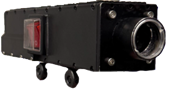
Figure 4 – Prototype of the "Blind Man" product
In December 2024, the Slepysh laser complex was tested at landfills. The power of the emitter allows forming a spot with a diameter of 1 meter at a distance of up to 100 meters and burning through paper [16]. According to the developers, mass production will be launched by the end of 2025. Table 3 shows some of the technical characteristics of the "Blind Man" product.
Table 3 – Technical characteristics of the "Slepysh" product | Name of the characteristic | The value of the characteristic | | Range of the complex, m | 100 | | Laser spot diameter (at a distance of 100 m), m | 1 | | Coherent radiation flux density (estimated), J/cm2 | ~ 0,005 |
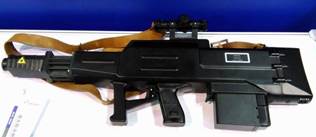
The ZM-87 laser system (China) was developed as a non-lethal weapon for blinding the enemy (Figure 5). It was first presented in 1995 at arms exhibitions in Abu Dhabi and the Philippines [17]. In appearance, the complex resembles a heavy machine gun with a length of 84 cm, which "shoots" flashes with a frequency of 5 pulses per second. The radiation power of the ZM-87 product is sufficient to burn out the retina of the eye at a distance of 3 km. According to the developers, the sevenfold lens increases the range of damage to 5 km, and from 10 km the ZM-87 is capable of temporarily blinding the enemy [17].
| 
| 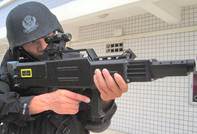
| | but | b | Figure 5 – ZM-87 laser complex: appearance (a), application (b) It should be noted that work on the creation and implementation of these weapons was stopped due to the adoption of an international convention prohibiting laser exposure to the enemy, which can cause vision loss (blindness). According to official data, a total of 22 complexes were produced. Table 4 shows some of the technical characteristics of the ZM-87 product.
Table 4 – Technical characteristics of the ZM-87 product | Name of the characteristic |
The value of the characteristic | | Effective range of the complex, km | ~ 3 | | Maximum range of the complex, km | 10 | | Weight, kg | 35 | | Human impact | Severe skin burns |
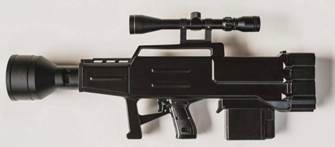
The ZKZM-500 laser complex (China) was developed by ZKZM Laser in the interests of law enforcement ministries and departments of the People's Republic of China. The first mentions of the product appeared in publications in 2018 [18]. It looks like an assault rifle. It is classified as a "non-lethal" weapon [18, 19]. The ZKZM-500 laser system is illustrated in Figure 6.
| 
| 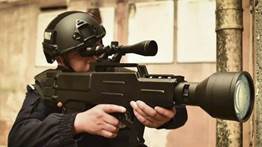
| | but | b | Figure 6 – ZKZM-500 laser system: appearance (a), application (b)
According to the developers, despite the fact that the weapon belongs to the "non-lethal" class, the energy of the beam is enough to cause skin burns and charring of tissues [18, 19]. Table 5 shows some of the technical characteristics of the ZKZM-500 laser system.
Table 5 – Technical characteristics of the ZKZM-500 product | Name of the characteristic | The value of the characteristic | | Maximum range of the complex, m |
800 | | Laser spot diameter (at a distance of 800 m), m | no data available | | The battery is rechargeable | Li-ion | | Weight, kg | 3 | | Human impact | Severe skin burns |
The SMU 100 laser system was developed by Photonic Security Systems (UK) in the interests of the police to disperse participants in mass riots [18, 20]. It was originally designed for merchant ship crews as a means of combating pirates. The SMU 100 product looks like a sniper rifle (Figure 7). This complex can cause short-term blinding.
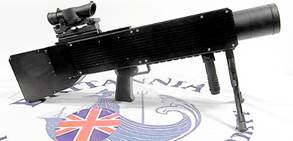
Figure 7 – SMU 100 laser system
Table 6 shows some technical characteristics of the SMU 100 laser complex [18, 20].
Table 6 – Technical characteristics of the SMU 100 product | Name of the characteristic | The value of the characteristic | | Maximum range of the complex, m | up to 500 | | Laser spot diameter (at a distance of 500 m), m | ~ 3 | |
Human impact | Blindness and disorientation |
The PHASR laser system (USA) was developed at the Air Force Research Laboratory in Kirtland (New Mexico) in 2007 in the interests of the US Department of Defense for temporary blinding and disorientation of the enemy [18]. It looks like a rifle. It is classified as a "non-lethal" laser weapon. The appearance of the PHASR laser complex is shown in Figure 8.
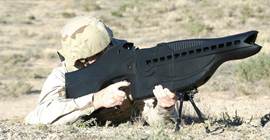
Figure 8 – PHASR laser system
Information about the tactical and technical characteristics of the PHASR product is not provided in open sources. This complex is a low-intensity laser, so its blinding effect is temporary [18]. It should be noted that the PHASR product can cause serious burns to a person. Thus, the results of the analysis of the technical means of optoelectronic suppression made it possible to form an overview of portable, relatively low-power laser complexes, which, according to their tactical and technical characteristics, can be used to dazzle autonomous UAVs with an intelligent computer vision system. The selection of a specific sample requires additional research.
Conclusion In this article, it is noted that low-power lasers can be used to counter autonomous UAVs with an intelligent computer vision system. Experimental results confirming the possibility of optoelectronic suppression of optical devices by a coherent radiation source with an output power of up to 100 MW are presented. The analysis of the video materials made it possible to evaluate the blinding effect when a laser beam is incident at various angles on a camera capable of recognizing human images in a frame using a developed software tool based on the neural network model of the YOLO family. In addition, the work focuses on the main failures and errors that occur when blinding autonomous UAVs with an intelligent computer vision system. Based on the analysis of publications, a classification of malfunctions of photosensitive sensors and cameras has been formed. The article also presents the results of an analysis of portable low-power laser systems that can be used for optoelectronic suppression of autonomous UAVs with an intelligent computer vision system. The results obtained can be used in research aimed at developing laser complexes and their use as part of physical protection systems that protect important facilities from attacks by autonomous UAVs.
The article is published in the version approved by the reviewers (after receiving a positive review recommending the manuscript for publication) with corrections made by the author (after receiving the editor’s comments, if any).
Read all reviews on this article
References
1. Egurnov, V. O., Nikolaev, N. V., & Nekrasov, M. I. (2021). On the justification of the appearance of the counteraction system against robotic complexes at protected facilities. Armament and Economy, 4, 121-134. EDN: VMEZXL.
2. Il'in, V.V., Nikolaev, N.V., Nekrasov, M.I., Sokolov, A.M. (2023). An Approach to Evaluating the Effectiveness of Systems for Countering Robotic Complexes at Important Facilities. Security Issues, 4, 15-26. https://doi.org/10.25136/2409-7543.2023.4.39479
3. Makarenko, S. I. (2020). Counteraction to unmanned aerial vehicles. St. Petersburg: High-tech. EDN: YSBRZJ.
4. Nikolaev, N.V., Il'in, V.V., Nekrasov, M.I. (2024). Topical issues of countering modern autonomous unmanned aerial vehicles and FPV drones. Security Issues, 1, 40-60. https://doi.org/10.25136/2409-7543.2024.1.68860
5. Shaydaev, M. Sh. (2023). Laser systems for combating unmanned aerial vehicles: advantages and disadvantages. Academic Thought Online Edition, 4, 157-162. EDN: MPGQIS.
6. Vaganov, S. A. (2019). Non-lethal effects of directed optical radiation on devices with light-sensitive sensors. Scientific and Technical Bulletin of Information Technologies, Mechanics and Optics, 19(6), 1031-1040. https://doi.org/10.17586/2226-1494-2019-19-6-1031-1040. EDN: NUEBSI.
7. Korolev, T. K., Platonova, A. A., & Vaganov, S. A. (2019). Formation of high-intensity pulsed incoherent visual-optical signals in the range of 0.35-2.5 µm. Scientific and Technical Bulletin of Information Technologies, Mechanics and Optics, 19(1), 47-51. https://doi.org/10.17586/2226-1494-2019-19-1-47-51. EDN: YXUPRJ.
8. Unmanned aerial vehicles for military purposes: monograph, part 1. V. A. Aladinsky, S. V. Bogdanovsky, V. M. Klimenko, V. A. Romashov (Eds.). (2019). Cherepovets: RIO VVIUR.
9. Vasilyev, M. E., Shalimov, A. S., & Savina, O. A. (2025). Overview of Yolo versions: single-stage convolutional neural network model. Universum: Technical Sciences, 6, 37-46.
10. Analysis of the effect of laser radiation on UAV optical devices / Vorganov, A. A., Kotenyev, E. V., Kurdyumov, I. A., et al. (2024). International Journal of Information Technologies and Energy Efficiency, 9(10), 165-173. EDN: YMWVZW.
11. Rostopchin, V. V. (2019). Strike unmanned aerial vehicles and air defense: problems and prospects of counteraction. Unmanned Aviation [Electronic resource]. URL: https://www.researchgate.net/publication/331772628_udarnye_bespilotnye_letatelnye_apparaty_i_protivovozdusnaa_oborona_-problemy_i_perspektivy_protivostoania
12. Tarasova, K. O., & Tarasov, O. A. (2025). Optical counteraction to drones by temporarily blinding them with lasers at close range. Start in Science [Electronic resource]. 23.09.2025. URL: https://files.school-science.ru/pdf/21/65cc806951440.pdf
13. Zoев, I. V., Markov, N. G., & Ryzhova, S. E. (2019). Intelligent system of computer vision for unmanned aerial vehicles for monitoring technological facilities in the oil and gas industry. Reports of Tomsk Polytechnic University. Engineering of Georesources, 330(11), 34-49. https://doi.org/10.18799/24131830/2019/11/2346. EDN: OTTUWP.
14. Ryabov, K. (2023). New approaches to air defense. Combat lasers against UAVs. Arguments of Time [Electronic resource]. 20.07.2023. URL: https://svgbdvr.ru/vooruzhenie/novye-podkhody-k-pvo-boevye-lazery-protiv-bpla-ysclid=milw1xh29h547573497
15. Laser emitter "Slepish" undergoes field tests. TASS [Electronic resource]. 14.12.2025. URL: https://tass.ru/armiya-i-opk/22668771
16. Sreda, S. (2025). Russian engineers test new means of blinding drones. RGR [Electronic resource]. 14.12.2025. URL: https://rg.ru/2024/12/14/rossijskie-inzhenery-ispytyvaiut-novoe-sredstvo-oslepleniia-dronov.html
17. Chinese combat "humane" laser ZM-87. Military Review [Electronic resource]. 30.10.2016. URL: https://topwar.ru/102795-kitayskiy-boevoy-gumannyy-lazer-zm-87.html-ysclid=milukg9azh438253505
18. Poroskov, N. (2022). "Hyperboloid" of non-lethal action. Weekly Star [Electronic resource]. 15.12.2022. URL: https://zvezdaweekly.ru/news/20221281819-83vRx.html-ysclid=milumfadd1290732678
19. Fakhrutdinov, R. (2018). China switches to laser weapons. Gazeta.ru [Electronic resource]. 02.07.2018. URL: https://www.gazeta.ru/army/2018/07/02/11824123.shtml-ysclid=mim55d5ddy664872880
20. British police to test laser capable of temporarily blinding participants in mass riots. TASS [Electronic resource]. 12.12.2011. URL: https://tass.ru/obschestvo/519267
Peer Review
Peer reviewers' evaluations remain confidential and are not disclosed to the public. Only external reviews, authorized for publication by the article's author(s), are made public. Typically, these final reviews are conducted after the manuscript's revision. Adhering to our double-blind review policy, the reviewer's identity is kept confidential.
The list of publisher reviewers can be found here.
The presented article on the topic "Optoelectronic suppression of cameras of autonomous unmanned aerial vehicles with an intelligent computer vision system" corresponds to the topic of the Security Issues magazine and is devoted to an urgent issue - the search for ways to counter unmanned aerial vehicles (UAVs), which is one of the important problems of ensuring the defense and security of the Russian Federation. This issue is relevant due to the fact that, on the one hand, UAVs are continuously developing in the direction of achieving high flight performance, introducing new principles of control and data transmission, using an extensive range of payloads, on the other hand, UAVs are widely used in the area of a special military operation to solve reconnaissance, strike and other tasks. The article presents a broad analysis of Russian literary sources on the research topic. The list of references contains twenty sources, and there is a link to each source in the text. As the purpose of the study, the authors indicate the development of methods for countering UAVs in terms of optoelectronic suppression of autonomous UAV cameras with a computer vision system by blinding with a low-power laser as part of improving the scientific and methodological apparatus for substantiating physical protection systems for objects. The style and language of the presentation of the material is scientific and accessible to a wide range of readers. The volume of the article corresponds to the recommended volume of 12,000 characters or more. The article contains eight figures and six tables. The article is quite structured - there is an introduction, conclusions, internal division of the main part (there are sections: 1. The results of an experiment on optoelectronic suppression of optical devices by a source of low-power coherent and incoherent radiation; 2. The results of an analysis of malfunctions that occur when blinding UAV cameras with an intelligent computer vision system; 3. The results of an analysis of technical means of optoelectronic suppression to counter autonomous UAVs). The authors conducted an experiment demonstrating the possibility of optoelectronic suppression of optical devices by a source of low-power coherent radiation. Malfunctions that occur when blinding UAV cameras with an intelligent computer vision system are also classified, and an analysis of technical means implementing optoelectronic suppression technology to counter modern UAVs is carried out. As a conclusion, the authors indicate that low-power lasers can be used to counter autonomous UAVs with an intelligent computer vision system. Experimental results confirming the possibility of optoelectronic suppression of optical devices by a coherent radiation source with an output power of up to 100 MW are presented. The practical significance of the article is clearly justified. The results obtained can be used in research aimed at developing laser complexes and their use as part of physical protection systems that protect important facilities from attacks by autonomous UAVs. The article "Optical-electronic suppression of cameras of autonomous unmanned aerial vehicles with an intelligent computer vision system" can be recommended for publication in the journal "Security Issues".
| 




 © 1998 – 2026 Nota Bene. Publishing Technologies. NB-Media Ltd.


