Security Issues
Reference:
Lyutikova, L.A., Hashirova, T.Y., Arvanova, S.M. (2025). Formal Interpretation of RL Agent Strategies in Cybersecurity Tasks Based on Temporal and Epistemic Logic. Security Issues, 4, 30–41. https://doi.org/10.25136/2409-7543.2025.4.77113
Formal Interpretation of RL Agent Strategies in Cybersecurity Tasks Based on Temporal and Epistemic Logic
Lyutikova Larisa Adol'fovna
ORCID: 0000-0003-4941-7854
PhD in Physics and Mathematics
Head of the Department of Neuroinformatics and Machine Learning; Institute of Applied Mathematics and Automation of the Kabardino-Balkarian Scientific Center of the Russian Academy of Sciences
89a Shortanova str., Nalchik, 360000, Russia, Republic of Kabardino-Balkaria

|
lylarisa@yandex.ru
|
|
 |
Other publications by this author
|
|
Hashirova Tat'yana Yur'evna
Doctor of Technical Science
Professor; Institute of Electronics, Robotics and Artificial Intelligence; Kabardino-Balkarian State University named after H.M. Berbekov
Nalchik, St. 44 Shortanova, sq.5
|
|
khashirova@mail.ru
|
|
 |
|
Arvanova Saniyat Muhamedovna
Lecturer; Department of Computer Security; Kabardino-Balkarian State University named after H.M. Berbekov
Nalchik, St. 44 Shortanova, sq.15
|
|
arvansa@mail.ru
|
|
 |
|
DOI: 10.25136/2409-7543.2025.4.77113
EDN:
HTKKFO
Received:
11/29/2025
Published:
12/06/2025
Abstract: The paper presents a formal approach to explainable reinforcement learning aimed at developing trusted intelligent systems in the field of cybersecurity. A mathematical model of an RL agent is proposed, which operates in an uncertain network environment and makes decisions on traffic inspection or blocking based on reward function optimization and partial observation of the network state. The subject of the research is the logical‑mathematical interpretation of RL agent strategies, which allows linking its behavior with formally verifiable properties of security, reachability, and causal sequence of actions. The method provides interpretation of the agent’s strategy using temporal logic, enabling formal verification of its compliance with specified security and reachability properties. The proposed mathematical model connects the decision‑making process regarding traffic blocking or inspection with causal structures and logical inference. This approach is aimed at creating trusted and auditable cyber‑physical systems whose behavior can be rigorously verified. The research methodology in this paper is based on the synthesis of machine learning techniques and formal logic. This approach enables a transition from empirical optimization to formal, verifiable behavior specifications, which constitutes its key innovation. The effectiveness of the methodology is confirmed by a computational experiment. The scientific novelty lies in the integration of reinforcement learning with logical models of LTL (Linear Temporal Logic) and EL (Epistemic Logic), which enables transition from empirically derived policies to formal specifications subject to automatic verification. It is shown that the combined use of temporal and epistemic logic allows describing the agent’s response to network anomalies both in the temporal dimension and from the perspective of the agent’s knowledge level under partial observability. The obtained results confirm that the logical‑mathematical interpretation of RL agent strategies is an effective tool for enhancing transparency, predictability, and trust in intelligent cybersecurity systems.
Keywords:
model, interpretation, logical analysis, data, algorithm, The agent, reinforcement learning, artificial intelligence, record, message
This article is automatically translated.
Introduction Modern cybersecurity systems face a constant increase in the complexity of network architecture and an increase in the variety of attacking influences. In these conditions, the ability of intelligent systems not only to effectively detect threats, but also to explain the decisions taken is of particular importance. The concept of explicable artificial intelligence (Explicable AI, XAI) is becoming a key direction in the development of trusted AI systems [1]. Traditional intrusion detection methods (IDS/IPS) based on signatures or statistical models have limited ability to adapt to new types of attacks and do not provide interpretation solutions. In contrast, Reinforcement Learning (RL) provides the ability to autonomously form an optimal strategy for agent behavior based on interaction with the environment. However, the internal mechanisms of RL agents are often opaque and difficult to interpret. The problem of explainability of RL agent solutions is particularly acute in the field of cybersecurity, where a high degree of trust in the system's performance is required. To eliminate the "black box" effect, it is proposed in this paper to use formal logical models that allow describing and verifying agent behavior in terms of time dependencies and knowledge [2]. Linear Temporal Logic (LTL) allows you to capture cause-and–effect relationships between events, while Epistemic Logic (EL) formalizes agents' knowledge of the state of the system and the level of threats. The integration of these logical tools with reinforcement learning makes it possible to build explicable, verifiable, and reproducible strategies for responding to anomalies [3]. The purpose of this work is to develop and experimentally verify an RL agent model capable of making decisions in a network environment interpreted in terms of temporal and epistemic logic. The article presents the problem statement, mathematical formalization, description of the method of extracting logical rules and the results of a computational experiment confirming the effectiveness of the proposed approach[4]. The subject of research in this paper is the logical and mathematical interpretation of the strategies of an intelligent agent trained by reinforcement learning, operating under conditions of partial observability and stochastic dynamics of the network environment. The novelty of the work is the creation of a formally grounded explicable RL algorithm that ensures trust, reproducibility and transparency of solutions in cyber defense systems.
1. Setting the task Let's assume that the environment is a computer network with a state  reflecting traffic metrics (number of connections, ports, delays, error rate). The agent chooses an action reflecting traffic metrics (number of connections, ports, delays, error rate). The agent chooses an action  (skip, check, block), receiving a reward (skip, check, block), receiving a reward . The dynamics of the environment is described by a stochastic process: . The dynamics of the environment is described by a stochastic process: 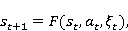
where  is the noise of external influences. is the noise of external influences. The task of agent training is formulated as optimization of the return function.:  1 1
where  is the strategy, is the strategy,  and is the discount coefficient. and is the discount coefficient. The agent must recognize abnormal patterns in network traffic (packet frequency, ports, IP addresses, delays, deviations). To determine the optimal response: "Pass" — to skip traffic, or "Inspect"— to check, or "Block" — to block the connection. Maximize the return function (1), where the reward  takes into account the balance between safety and cost. To ensure the explainability of solutions, it is possible to describe actions in the form of logical formulas. takes into account the balance between safety and cost. To ensure the explainability of solutions, it is possible to describe actions in the form of logical formulas. 2. Mathematical model and formalization of the problem
Consider a cybersystem as a stochastic environment 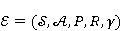 where: where:  — a set of environmental conditions describing network parameters (traffic speed, number of connections, number of errors, threat indicators); — a set of environmental conditions describing network parameters (traffic speed, number of connections, number of errors, threat indicators);
 — multiple agent actions (skip, check, block); — multiple agent actions (skip, check, block);
 when performing an action when performing an action  in the state in the state ; ;
 — reward function; — reward function;
 — discount rate. — discount rate.
At each time step , the agent observes the current state , selects a strategy action , receives a reward, and moves to a new state , the agent observes the current state , selects a strategy action , receives a reward, and moves to a new state  according to the distribution according to the distribution . . The agent's goal is to maximize the expected discounted return:  1 1
The value function  is defined as the expected reward when choosing an action in a state and then following the policy. is defined as the expected reward when choosing an action in a state and then following the policy. : :  2, 2,
The iterative update for the approximation  function (the Q-learning method) has the form: function (the Q-learning method) has the form:  3, 3,
where  is the learning rate. is the learning rate. The state of the environment is described by a vector of network features: 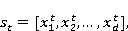
where  are the normalized values of network parameters: packet frequency, percentage of TCP reconnections, average response time, number of connections per port, etc. are the normalized values of network parameters: packet frequency, percentage of TCP reconnections, average response time, number of connections per port, etc. The agent  's action is selected from a set 's action is selected from a set  where: where:
 — skip traffic (pass); — skip traffic (pass);
 — check (inspect); — check (inspect);
 — block (block). — block (block).
The reward function has the form:  4 4
This function reflects a balance between security (timely blocking) and saving resources (avoiding unnecessary checks) [5]. After training, the strategy  is approximated by a neural network with parameters is approximated by a neural network with parameters . To ensure explainability, logical rules are extracted. . To ensure explainability, logical rules are extracted. 3. Logical grounds for interpreting agent behavior Temporal Logic (LTL) Linear Temporal Logic (LTL) is used to formally describe sequential processes where the state of the system changes over time. She uses statements about the future and the past of events, allowing her to formalize the requirements of safety and liveliness. The main LTL operators necessary for this field are presented in Table e1. Table 1. The main LTL operators | Smvol | Title | Interpretation | | 
| always | always  (invariant) (invariant) | | 
| eventually | someday |
| 
| next | in the next step | | 
| until |  runs until runs until
|
Example of the formula: which reads as: “always, if an anomaly occurs, then a blockage will occur in the future” [6]. which reads as: “always, if an anomaly occurs, then a blockage will occur in the future” [6]. The behavior of an agent in reinforcement learning is a sequence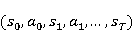 , which is naturally described in terms of temporal logic. This allows you to set and check the system properties.: , which is naturally described in terms of temporal logic. This allows you to set and check the system properties.: Safety  This expression states that a state is prohibited where an attack has been detected, but the agent has not taken defensive action. This expression states that a state is prohibited where an attack has been detected, but the agent has not taken defensive action. Achievability of a goal (liveness)  asserts that it is always possible that a threat will be eliminated in the future. asserts that it is always possible that a threat will be eliminated in the future. The sequence of actions: which reads as "Always, if the check action is performed, then the next step will either block or restore the norm." which reads as "Always, if the check action is performed, then the next step will either block or restore the norm." The introduced formulas of temporal logic (safety, liveness, and order) make it possible to move from empirical reinforcement learning based on statistical optimization of the reward function to formally verifiable agent behavior. Within the framework of this model, each trajectory of an agent's interaction with the environment is considered as a sequence of states and actions over which a logical check can be performed for the fulfillment of a security property, which ensures that during the functioning of the system there are no states in which an attack remains unanswered. A livability property that ensures that the network can be restored to normal operation after a threat. And the property of the sequence of actions that captures the causal relationships between the phases of response (detection - verification — blocking/normalization) [7]. Verification of these formulas by means of formal verification (for example, using the NuSMV or SPIN checker model) makes it possible to verify that the agent's strategy not only maximizes remuneration, but also meets the logical criteria of correctness, stability and explainability. Thus, stochastic reinforcement learning and formal logic methods are integrated, ensuring the explainability and reproducibility of intelligent security solutions. Epistemic logic (logic of knowledge) Epistemic Logic (EL) describes the knowledge and beliefs of agents. The main operator  means: “the agent means: “the agent  knows that.” Collective operators are introduced for groups of agents.: knows that.” Collective operators are introduced for groups of agents.:

Agents in the cybersystem work in conditions of incomplete information: everyone observes only a part of the signs of traffic. Therefore, a formal description of knowledge and awareness is required. Individual knowledge looks like collective knowledge: 
This model is important for distributed agents operating on different network nodes: some detect a threat, others confirm or respond by forming collective knowledge and coordinating actions [8]. LTL and EL combination The combined use of temporal and epistemic logic makes it possible to describe both the dynamics of behavior and the level of knowledge of agents. For example: – “always, if an agent knows about an anomaly, he initiates a block in the future.” – “always, if an agent knows about an anomaly, he initiates a block in the future.” Justification of applicability to the data in Table 2. Table 2. Rationale for applying LTL and EL logic to data | Data characteristics | Justification of the logical model | | Sequence of states (time series) | LTL is described, which captures cause-and-effect relationships over time | | Partial observations of agents | They are modeled through epistemic logic (knowledge operators  ) ) | | Communication between agents | They require a formalism of collective knowledge | | Checking the correctness of actions | LTL allows you to formalize the security and reachability properties. | | Interpretation of strategies | IF–THEN the rules are converted to LTL formulas | | Joint decision-making |
EL describes the dissemination of knowledge and the collective reaction of agents |
Input data structure Each observation of the environment at a given time is described by a feature vector: 
where  are the normalized network metrics. The agent's input data is presented in Table 3. are the normalized network metrics. The agent's input data is presented in Table 3. Table 3. Agent input data | Sign | Description | Interpretation | | 
| Packet Intensity (Packets/s) | Growth in DDoS attacks | | 
| Average package size | High values for data exfiltration | | 
| TCP/UDP error rate | It grows under overload or DoS | | 
|
Number of connections | Increased with brute force | | 
| Entropy of IP sources | High in distributed attacks | | 
| The interval between requests | Less in case of script attacks |
Agent's output data The agent chooses actions : : – Pass: skip the stream; – Inspect: perform an inspection; – Block: Block the connection. The result is an optimal policy and function . Based on them, logical rules are extracted, for example: . Based on them, logical rules are extracted, for example:
4. Computational experiment The step-by-step implementation of the method is as follows: 1. Download the cybersecurity environment; 2. we train the DQN agent; 3. we collect trajectories and build graphs (reward, distribution of signs of norms/anomalies);
4. Extract and print the rules; 5. We show which anomalies the agent actually "saw". An example of the data in Fig. 1. 
Figure 1. Sample data. The block diagram of the algorithm is shown in Fig. 2. 
Figure 2. Algorithm diagram Results The graph of agent behavior in the reinforcement learning process is shown in Fig. 3.

Figure 3. The process of training an agent by episode.
X-axis (horizontal) this is the training episode number. Each episode is a separate series of agent interactions with the environment (for example, 50 steps). At the beginning of the training, the agent acts randomly, and by the end it becomes more meaningful. Episodes 0-50 give chaotic low values, which indicates that the agent is just learning. Then (100-200 episodes) — the average reward begins to grow, although fluctuations remain. After ~250 episodes, stabilization is at a high level: the average reward value is above 60-70 (or any upper bound for your environment). The main thing is the average line level. If the curve "as a whole" goes up, it means that the agent learns the strategy, even if each specific episode is "jagged" [9]. Intensity histograms (the X₁ sign) are a very revealing visual element that actually shows how an agent “sees” the difference between normal and abnormal traffic [10]. The histograms show the distribution of one feature, x1, which indicates the intensity of network traffic (number of packets per second) (Fig. 4). 
Figure 4. Network traffic intensity The left histogram is "X₁ (intensity) is the NORM". Shows how the intensity values are distributed during normal network operation when there is no anomaly (anom = 0). The right histogram is "x₁ (intensity) – ANOMALY". The same thing, but only for abnormal states (anom = 1). Next comes the formation of logical rules, a fragment of which is shown in Fig. 5. 
Figure 5 Fragment of logical rules Based on the data under consideration, the agent achieves an anomaly detection accuracy of 94-96% with an average reaction delay of less than 0.3 s. The logical interpretation shows that the agent's strategy follows the rules of the form:  [11] [11]
The formulas obtained are successfully tested for the feasibility of the specifications  and and  . .
Conclusion
The paper proposes a method for the logical and mathematical interpretation of strategies obtained during reinforcement learning in relation to cybersecurity tasks. An RL agent model has been developed that interacts with the network environment and makes decisions about checking or blocking traffic based on optimizing the reward function. The main scientific result is the integration of stochastic reinforcement learning methods with formal means of logical verification. The use of temporal logic (LTL) made it possible to formalize and verify the properties of safety, liveness, and causality of actions. Epistemic logic (EL) has provided an opportunity to describe the level of knowledge and awareness of agents in a distributed system. The results of the computational experiment showed that the agent is able to achieve high accuracy in detecting threats with a short reaction time, and the resulting logical formulas are successfully tested for the feasibility of specifications. This confirms that the logical interpretation of strategies increases transparency and trust in intelligent system solutions. In the future, it is planned to develop the proposed approach for multi-agent systems, including the exchange of knowledge between network nodes, as well as the implementation of automatic verification of logical properties in real time. Additionally, research on embedding logical constraints directly into the learning process (reward shaping) is of interest, which will allow combining optimality and explainability at the learning stage, and not just after the fact.
The article is published in the version approved by the reviewers (after receiving a positive review recommending the manuscript for publication) with corrections made by the author (after receiving the editor’s comments, if any).
Read all reviews on this article
References
1. Sutton, R. S., & Barto, A. G. (2020). Reinforcement learning: An introduction (2nd ed.). MIT Press.
2. Rybakov, V. V. (2015). Non-transition linear temporal logic, knowledge from the past, decidability, admissible rules. arXiv preprint arXiv:1503.08761.
3. Doshi-Velez, F., & Kim, B. (2017). Towards a rigorous science of interpretable machine learning. arXiv preprint arXiv:1702.08608.
4. Rudin, C. (2019). Stop explaining black box machine learning models for high stakes decisions and use interpretable models instead. Nature Machine Intelligence, 1, 206-215.
5. Wang, Y., Yu, W., & Seligman, J. (2022). Quantifier-free epistemic term-modal logic with assignment operator. Annals of Pure and Applied Logic, 173(3), article 103071. https://doi.org/10.1016/j.apal.2021.103071
6. Nguyen, T. T., & Reddi, V. J. (2022). Deep reinforcement learning for cyber security. Computers & Security, 113, 102583. https://doi.org/10.1109/TNNLS.2021.3121870
7. Baier, C., & Katoen, J.-P. (2008). Principles of model checking. MIT Press.
8. Shoham, Y., & Leyton-Brown, K. (2009). Multiagent systems: Algorithmic, game-theoretic, and logical foundations. Cambridge University Press.
9. Bashmakov, S. I., Kosheleva, A. V., & Rybakov, V. V. (2017). Unification in temporal multi-agent logics with universal modality. In Mathematics in the modern world: Proceedings of the international conference.
10. Wolter, F., & Zakharyaschev, M. (2008). Undecidability of the unification and admissibility problems for modal and description logics. ACM Transactions on Computational Logic, 9(4), 25.
11. Lyutikova, L. A. (2023). Methods for improving the efficiency of neural network decision-making. In Advances in automation IV: RusAutoCon 2022 (Vol. 986, pp. 294-303). Lecture Notes in Electrical Engineering. https://doi.org/10.1007/978-3-031-22311-2_29
12. Dyukova, E. V., Zhuravlev, Y. I., & Prokofyev, P. A. (2015). Methods for improving the efficiency of logical correctors. Machine Learning and Data Analysis, 1(11), 1555-1583.
Peer Review
Peer reviewers' evaluations remain confidential and are not disclosed to the public. Only external reviews, authorized for publication by the article's author(s), are made public. Typically, these final reviews are conducted after the manuscript's revision. Adhering to our double-blind review policy, the reviewer's identity is kept confidential.
The list of publisher reviewers can be found here.
The presented article on the topic "Formal interpretation of RL agent strategies in cybersecurity tasks based on temporal and epistemic logic" corresponds to the topic of the journal "Security Issues" and is devoted to the issue of creating a formally grounded explicable RL algorithm that ensures trust, reproducibility and transparency of solutions in cyber defense systems. The article presents a fairly broad analysis of literary Russian and foreign sources on the research topic. The list of references includes twelve points. There are links to all sources in the text. The authors of the article indicate the purpose of the study, which is to develop and experimentally verify an RL agent model capable of making decisions in a network environment interpreted in terms of temporal and epistemic logic. The article presents the problem statement, mathematical formalization, description of the method of extracting logical rules and the results of a computational experiment confirming the effectiveness of the proposed approach. The purpose, the subject of the research and the scientific novelty are formulated in the article. The style and language of the presentation of the material is scientific and accessible to a wide range of readers. The volume of the article corresponds to the recommended volume of 12,000 characters or more. The article is quite structured, with an introduction, conclusion, and internal division of the main part (Problem statement; Mathematical model and formalization of the problem; Logical foundations for interpreting agent behavior; Computational experiment; Results). The theoretical and methodological basis of the study was the work of such authors as Sutton R.S., Barto A.G.; Rybakov V. V.; Doshi-Velez F., Kim B.; Bashmakov S. I., Kosheleva A.V., Rybakov V. V. and others.. The results of the study are presented graphically (there are four figures), as well as three tables. The practical significance of the work lies in the integration of stochastic reinforcement learning methods with formal means of logical verification. In this paper, the authors propose a method for the logical and mathematical interpretation of strategies obtained during reinforcement learning in relation to cybersecurity tasks. An RL agent model has been developed that interacts with the network environment and makes decisions about checking or blocking traffic based on optimizing the reward function. As the main results, the authors indicate that the agent is able to achieve high accuracy in detecting threats with a short reaction time, and the resulting logical formulas are successfully tested for the feasibility of specifications. The authors also indicate the prospects for further research, which are expressed in the development of the proposed approach for multi-agent systems, including the exchange of knowledge between network nodes, as well as the implementation of automatic verification of logical properties in real time. The article "Formal interpretation of RL agent strategies in cybersecurity tasks based on temporal and epistemic logic" can be recommended for publication in the Security Issues journal.
| 




 © 1998 – 2026 Nota Bene. Publishing Technologies. NB-Media Ltd.


